CASE STUDY 02 / MOBILE APPLICATION
Barber House
Staff App.
Connecting people and processes.
A cross-platform employee application designed to centralize internal tools, simplify communication and improve everyday operational workflows.
THE APPLICATION
Designed for the people who use it.
A mobile-first experience that brings employee tools, information and communication together.
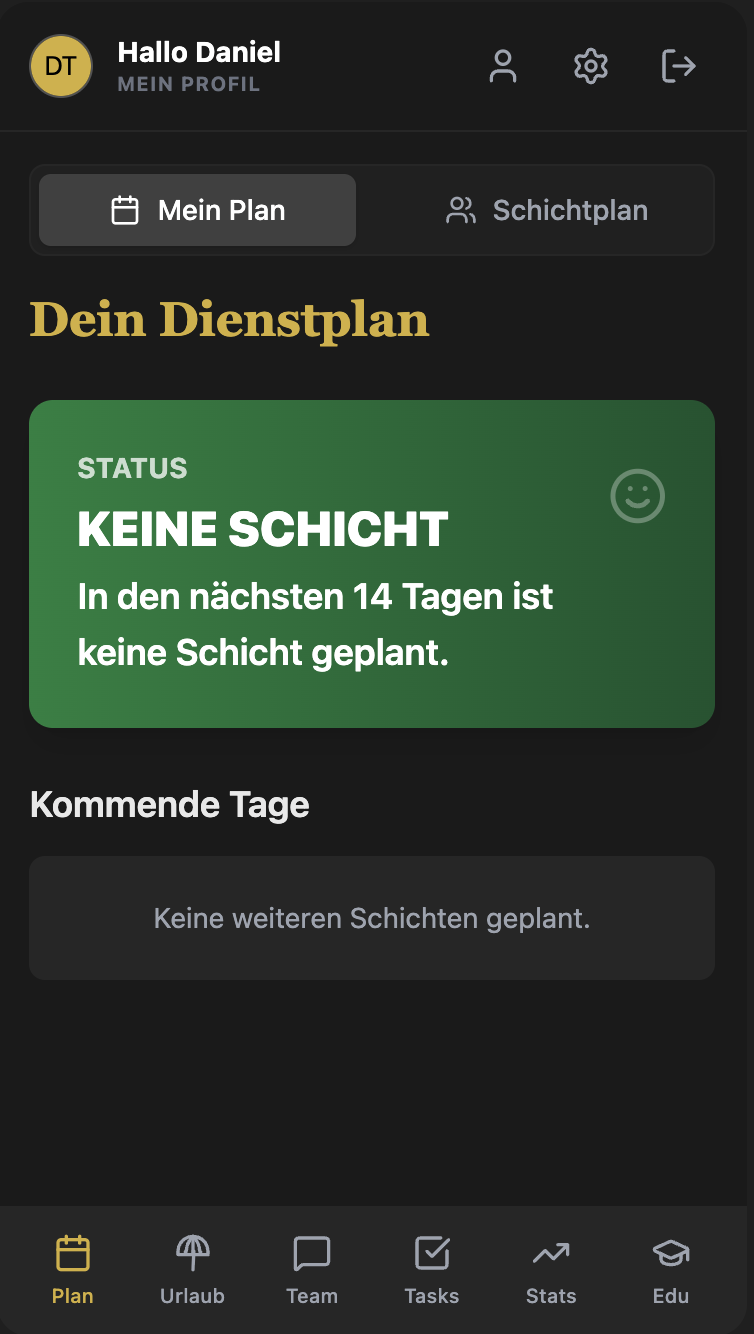
01 / DASHBOARD
Everything in one place.
A centralized mobile experience connecting employees with their daily tools and information.
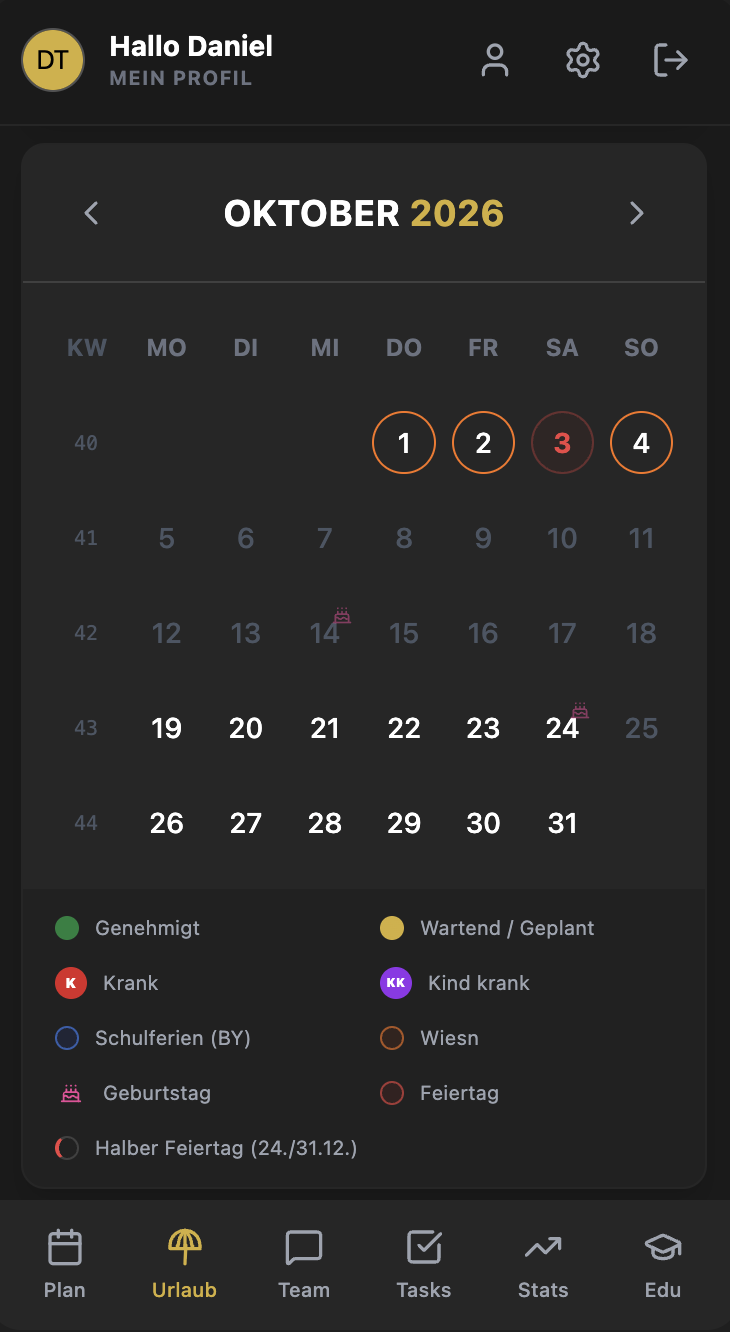
02 / CALENDAR
Plan your workday.
A calendar experience for viewing schedules, shifts and important events.
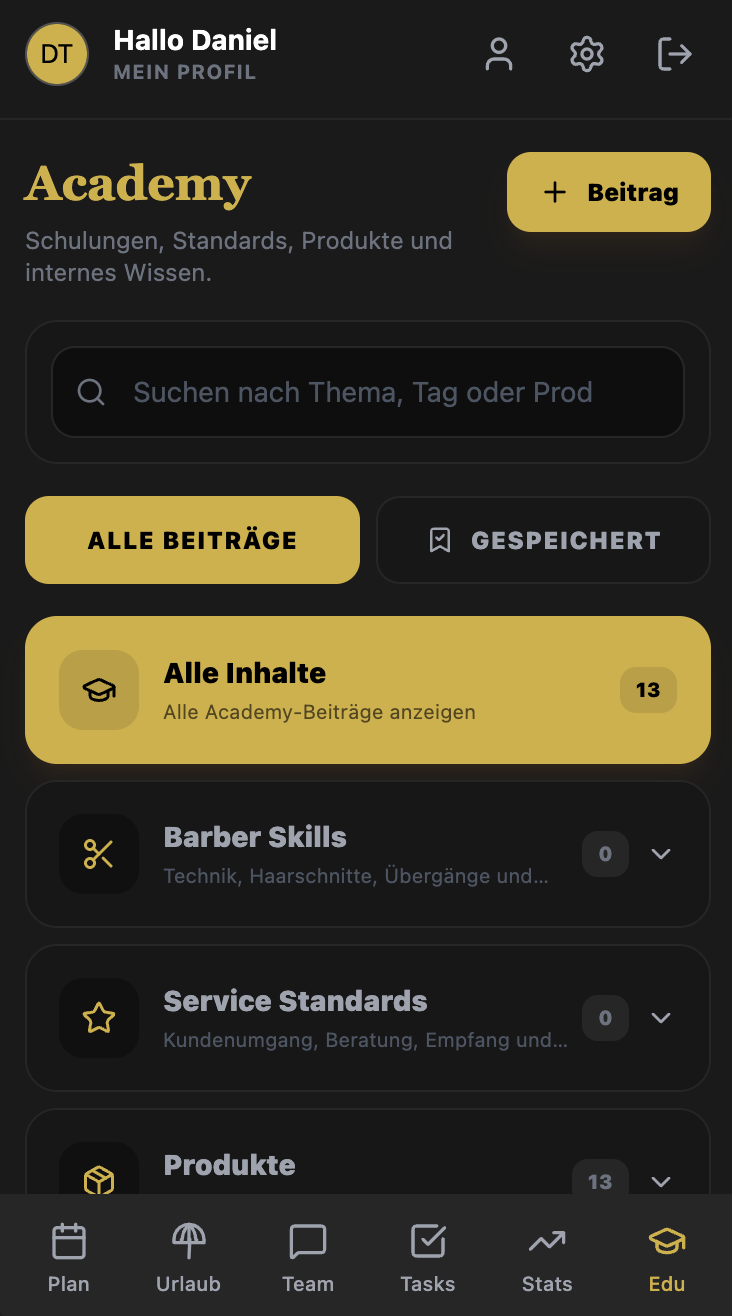
03 / ACADEMY
Knowledge at your fingertips.
An internal learning platform for training materials, service standards and product knowledge.
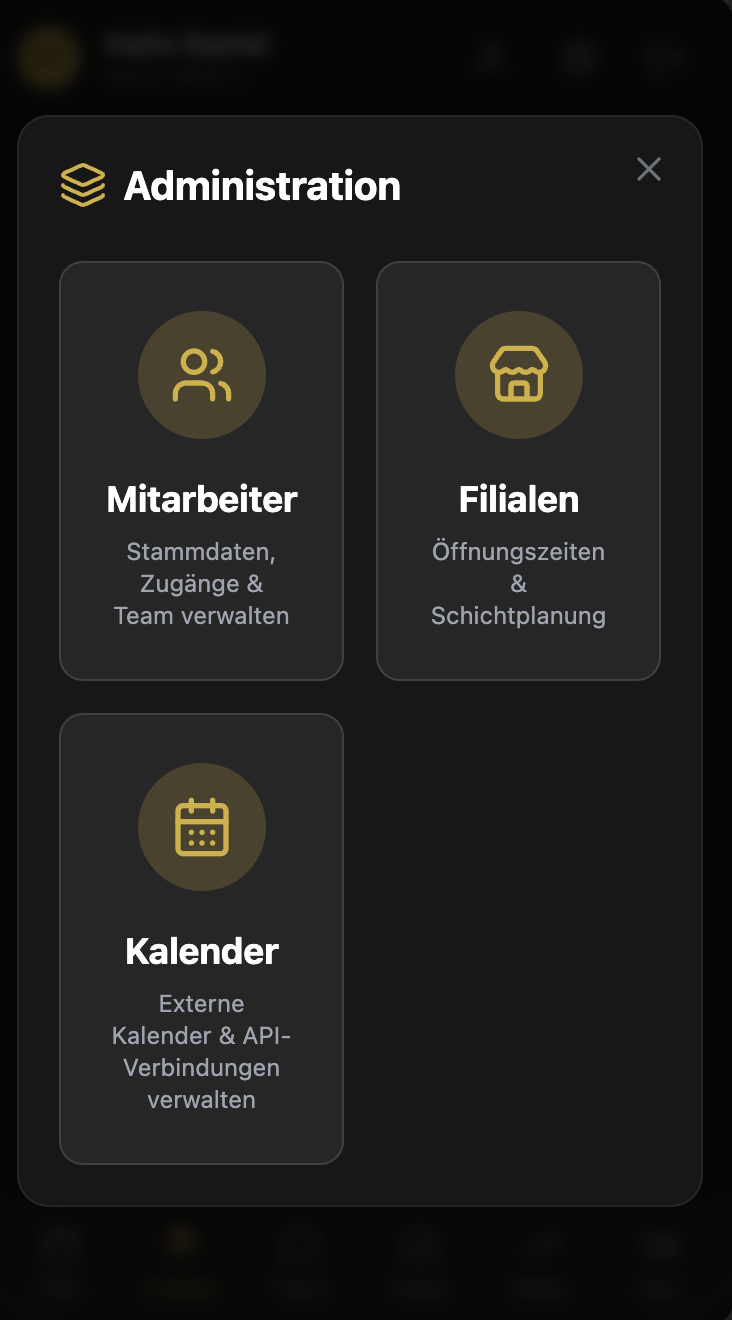
04 / ADMINISTRATION
Manage everything in one place.
Administrative tools for employee management, branch configuration and calendar integrations.
THE CHALLENGE
Better internal tools.
Better everyday workflows.
01 / The Problem
Information spread across different systems.
Employees need access to different types of information, internal resources and operational tools.
When these resources are distributed across multiple systems, everyday processes become less convenient and communication can become fragmented.
02 / The Solution
One application connecting essential tools.
The Barber House Staff App brings employee functionality together in a single mobile experience.
Built with React, Capacitor and Supabase, the application combines a modern user interface with cloud services and native mobile capabilities.
APPLICATION CAPABILITIES
Built for real-world use.
A combination of web technologies, backend services and native integrations supports the employee experience.
Centralized Employee Experience
A single mobile application designed to bring employee information and internal functionality together.
Authentication & Access Control
User authentication and database access policies help protect employee information and control access to application functionality.
Push Notifications
Native push notification capabilities connect backend events with employees' mobile devices.
Cloud Database Integration
Supabase provides the backend infrastructure for application data, authentication and database operations.
Cross-Platform Development
A shared React application is packaged for Android and iOS using Capacitor and native development tools.
Internal Academy
A dedicated knowledge platform for training resources, barber skills, service standards and product information.
TECHNICAL ARCHITECTURE
One codebase.
Multiple platforms.
A shared React application connects to Supabase for backend services, while Capacitor provides native Android and iOS integration.
APPLICATION
Barber House Staff App
One employee experience built around shared application logic and reusable components.
FRONTEND
React + Vite
Application interface, navigation, reusable components and client-side functionality.
CLOUD BACKEND
Supabase
Authentication, PostgreSQL database and server-side functionality.
SECURITY
Auth + RLS
Authentication and row-level database access policies.
BACKEND LOGIC
Edge Functions
Server-side operations and integrations.
NATIVE BRIDGE
Capacitor
Connects the React application with native device functionality.
PLATFORM
Android
Native Android configuration and build generation.
PLATFORM
iOS
Working native iOS application built with Capacitor and Xcode.
CROSS-SYSTEM INTEGRATION
BACKEND EVENTS
Application Logic
Backend operations can initiate notification delivery.
PUSH DELIVERY
Firebase Cloud Messaging
Delivers push messages to registered mobile devices.
Architecture overview simplified for presentation. The application combines shared frontend code, cloud services and platform-specific native integrations.
ENGINEERING DECISIONS
Solving the challenges behind the app.
One Application, Multiple Platforms
Challenge
Developing separate applications for Android and iOS would increase development and maintenance complexity.
Solution
Using React and Capacitor makes it possible to share the core application while integrating native functionality when required.
Secure Employee Data
Challenge
An employee application needs to manage access to internal information and functionality.
Solution
Supabase authentication and Row Level Security policies provide a foundation for controlling access to backend data.
Connecting Web and Native Features
Challenge
Web applications do not automatically have access to every native mobile capability.
Solution
Capacitor plugins bridge the React application with platform-specific functionality, including push notifications and system interface controls.
Application Build & Distribution
Challenge
Turning a web application into installable mobile software requires platform-specific configuration and build processes.
Solution
Android Studio and Xcode are used alongside Capacitor to configure, build and prepare the application for mobile distribution.
THE OUTCOME
From a business need
to a working application.
The Barber House Staff App demonstrates the development of a cross-platform mobile application built around practical operational requirements.
The project includes a fully functional React application, Supabase integration, native mobile capabilities and working builds for both Android and iOS. The application runs on both platforms using a shared codebase powered by Capacitor.